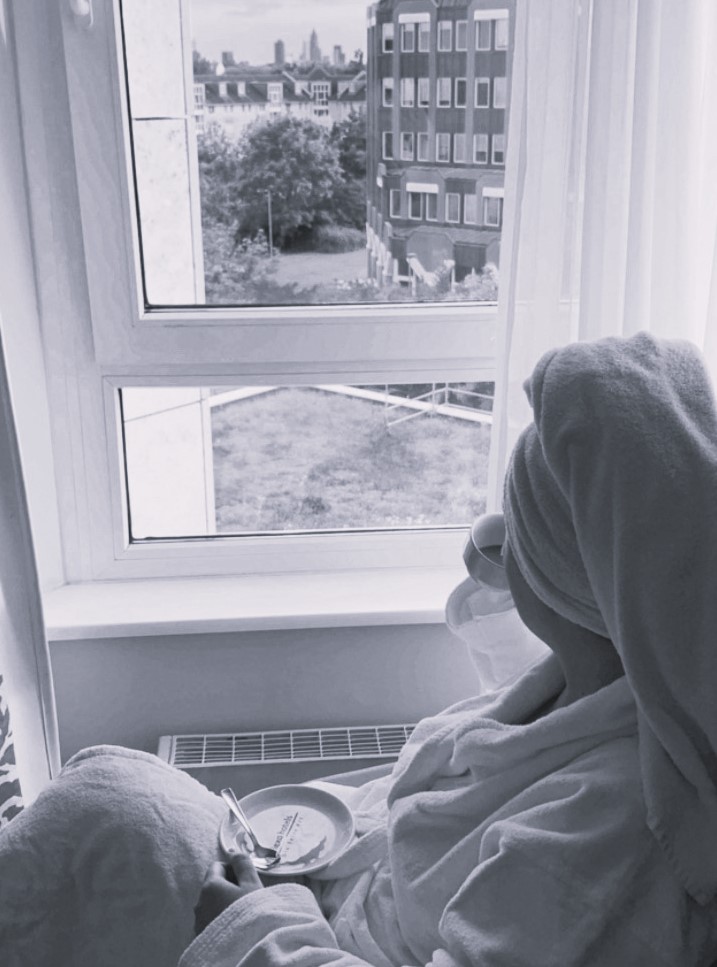
There is one feeling that never leaves us. No matter how much we think we lost it. Sometimes, it is blurring our clear and painful view of reality, in which case we are trying to remove any signs of presence of it from our hearts and minds. However, the truth is, we are human beings that live and continue to fight and persist in this broken world only because that one thing. It is called – hope.
Hello, my name is Selena, and welcome to my blog Alive and awake. I am so happy that you are here! 😊 I am a scientist, with a PhD in biochemistry, that is interested in how human brain functions at the biochemical level and how our brain’s wiring expands towards total awaking. Why do we become spiritual creatures? Why do we believe in God? And how that helps us ease brain health issues?
To be a human is to hope. Some say, hope is the last thing to die. It keeps us upright and ready; it gets us out of the bed in the morning. How many times in your life, all you could do is to hope that something will turn out good? I certainly had quite a few of these moments. And they are so important for us. If we lose hope, we are basically left with no innate drive to continue our lives towards our goals. With that, we cannot enjoy the journey towards that goal, which is anyway all that is important – it is about the journey, not the destination. So, I am wondering: how come we know so less about hope and brain health connection? Everyone of us is part of the collective consciousness and if one by one we get our hopes down, our collective self will be tremendously influenced as well. Again, isn’t it time to know more about how hope improves brain health and what can we do to keep its level at the comfortable high and individually optimized?
Hope is not the same as positive thinking or optimism. Positive thinking is an action where we deliberately put our efforts to imagine that the result of our actions or a certain situation will be good. Optimism does not need an effort per se; it is a belief that at the end everything will work out. Hope, however, is a process, mental action, where a person knows what is the end goal that he or she wants, has a plan how to achieve it and with that has a motivation and confidence that enables specific steps to be taken. This separation has to be taken not so lightly though, since all three states are activated by positivity and feeling good, which implicates that there must be some overlap in their pathways in the brain itself.
Couple of studies were performed in order to look a bit closely into the state of the brain whilst being hopeful. The first study used resting state MRI (monitoring brain activity at rest) to investigate how the functional brain looks like when individuals are hopeful. The correlation between the intensity of spontaneous brain activity and hope (measured using the Dispositional Hope Scale; DHS) was investigated and showed that higher levels of hope (agency thinking and pathway thinking combined) were related to lower spontaneous brain activity in the bilateral medial orbitofrontal cortex. This brain region is located in the frontal lobe, and is connected with motivation and decision-making processes, which are key elements of hope. Second study looked at the anatomy of the brain on hope using structural MRI. They examined the association between regional grey matter volumes and hope as measured via the DHS. Results showed a positive correlation between hope and grey matter volumes of the left supplementary motor area, which is located in the dorsomedial frontal cortex. It is responsible for organizing complex movements through connection between cognition and action. Interestingly, it forms a conduit between the prefrontal cortex where higher order thinking and planning occurs, and the primary motor cortex, which initiates voluntary movement. Since the supplementary motor area is involved in goal-directed behaviours, it makes sense that it is involved as a part of the hope pathway too. No connections between GMV and the individual components of hope (i.e., agency thinking vs. pathway thinking) were found. In conclusion, hope could be connected with the net in the frontal cortex, like the prefrontal cortex, which is found to be important in the states of optimism and positive thinking.
When talking about neurotransmitters that are linked with hope so far, it comes with no surprise that those are the same once that are used in therapy for depression or anxiety disorders. Main hormone that one study connected with hope was dopamine. One study found that improving dopamine function increased prediction bias in an optimistic direction. As there is the overlap in the networks of hope, optimism and positive thinking, there is a high probability that dopamine contributes to the expression of hope, as well. Other hormones, oxytocin, norepinephrine and serotonin, have been linked to feeling positive emotions and stabilizing the mood. They might help to increase the sense of determination, happiness and hopefulness.
However, is hope always a positive tool to use?
Some would argue that there are two types of hopes: true hope and false hope. True hope that comes from an individual was briefly discussed in the beginning of this text. It provides belief that the end result would be the desired one and influences the person in the positive way. False hope on the other hand is a negative type of hope, since it brings disappointment and frustration when the desired outcome does not materialize. It comes from the too broad of expectations or false expectations. Some psychologists say that it doesn’t matter if the hope is true or false; at the end, if it doesn’t come true, it is always false. This is what can be realized as a dangerous part of hope. If it comes to be false, a person who is at already fragile brain health state can have fatal endings. This is a drastic case, a drastic situation, however it could happen and it is a call to be also careful how we implement hope in our lives (in our own lives or as a professional in other people’s lives).
It has been showed that a person’s hope that an (experimental) treatment may prolong/improve his or her life can only be called false when he or she thinks that the chances of personal benefits are greater than those estimated by experts (doctors). So, if he or she does accept their opinions, continuing to hope can be realistic. Hope is realistic if it contributes to realizing what a person wants to achieve in his or her life.
I want to mention briefly another type of hope, biblical hope, since we have already talked about scientific side of hope. For example, biblical hope is foundationally more than a faint wish for something. It is more than moral expectations, more than motivation for a choice of action. Biblical hope is a confident expectation of a guaranteed result that changes the way you live. Biblical hope is never ending source of love and support. I find this description of hope so gentle, and yet, so powerful at the same time.
I would love that we all could look at hope as a river of positivity and power. Hope as a beginning and ending point of each of our lives. Hope that really changes the way we live in the most positive way. That there is no danger in having wishes, having confidence and some expectations. And if we reach the disappointment, in this life, in this world, that is nothing new; we can learn to go over it and reach for the flame of hope, that will never ever leave us. It might just hide until we want it to surface back. We people are, if anything, hopeful creatures, and that will never change. No matter how much we depend on technology, no matter how much we are consumed by AI, having hope, at least for some more years to come, will be something that distinguish us from any other animal species or a robot.
“Hope lies in dreams, in imagination, and in a courage of those who dare to make dreams into reality.” Jonas Salk
Never stop believing that the hope is inside of you. Make it a permanent resident of your awaken soul. I personally believe that hope is something good, something miraculous, and it here to stay as long as humans exist. Take a breath, smile and hope. Wish you a wonderful day or night.
Lots of love, Selena
- Dasgupta J, Furlano JA, Bandler Z, Fittipaldi S, Canty AJ, Yasoda-Mohan A, El-Jaafary SI, Ucheagwu V, McGettrick G, de la Cruz-Góngora V, Nguyen K-H, Lawlor B and Nogueira Haas A. 2023. Hope for brain health: impacting the life course and society. Front. Psychol. 14:1214014. doi: 10.3389/fpsyg.2023.1214014.
- Trip, DP. New Morning Mercies: A Daily Gospel Devotional (Classic Edition). 2014. Crossway Books. ISBN-13: 978-1-4335-4138-4.
- Musschenga B. Is There a Problem With False Hope? J Med Philos. 2019. Jul 29;44(4):423-441. doi: 10.1093/jmp/jhz010. PMID: 31356659; PMCID: PMC6900746.
 Alive and Awake