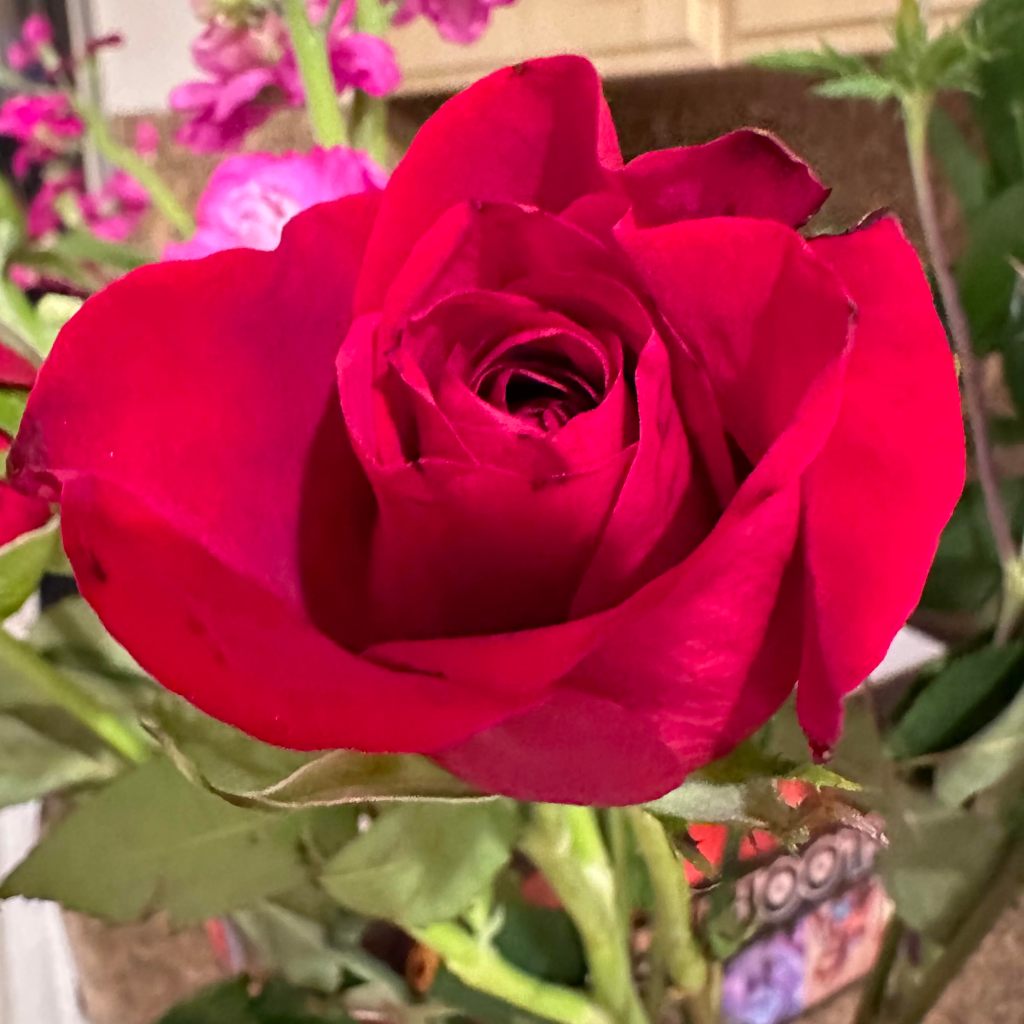
Love is the most beautiful, the most fulfilling, the most precious feeling in the world. Humans would do anything for love. Although, when it is not returned, brings suffer, pain, heartbreak. It is the thing that you live for. But also, many died for love, history teaches us. It is great, until it isn’t. So, what drives us to pursue it, when we rationally know that it can be something tricky, risky, unsecure? Why do people experience love?
Hello, my name is Selena, and welcome to my blog Alive and awake. I am so happy that you are here! 😊 I am a scientist, with a PhD in biochemistry, that is interested in how human brain functions at the biochemical level and how our brain’s wiring expands towards total awaking. Why do we become spiritual creatures? Why do we believe in God? And how that helps us ease brain health issues?
Lust. Like. Love.
Three different states of mind. Not necessarily including each other. All three controlled by our cauliflower-like organ, brain. Prefrontal cortex, hypothalamus and pituitary gland working on the spot.
Sex hormones drive lust; dopamine, norepinephrine and serotonin are in charge of attraction (liking) while vasopressin and oxytocin are key to love…
Lust is often times called desire for basic sexual gratification. But it is everything but basic. Driven by hormones testosterone and estrogen, this emotion fulfils one of the most important actions as beings, reproduction. And with that, plays a role in an evolutionary process. Both testosterone and estrogen are produced by sex organs characteristic for male and female organism, testes and ovaries, respectfully. The process is controlled by hypothalamus.
A process of attraction to someone (or liking someone) may be connected to lust but certainly does not have to be. Main hormones involved are dopamine, norepinephrine and serotonin. Since the main road that drives this process is through the reward path of the brain, in real life that expresses itself as in a way “addictive” behaviour. Euphoria that exists then can be associated with the one while using cocaine or alcohol. Kissing alone can be “addictive” and can produce high states.
When we like someone so much that we cannot sleep, eat, think and all our energy is focused on that specific person. Dopamine and norepinephrine levels rise, making us goofy, ecstatic, inpatient, while lower levels of serotonin make us unable to sleep and decreases our appetite. We are only “hungry” for love.
As the time passes, and we are still we the person the we were “hungry” for, those emotions can grow into love. Love is present in a long-term relationship, when we know the person well enough that some other pathways in our brain make us feel safe, calm and secure. Love is that amazing feeling that can come into our lives and make us surrender to someone completely. We can be loved for a long time or left alone heartbroken.
Hormones secreted when we are attached to someone are primarily oxytocin and vasopressin. Oxytocin is produced in the hypothalamus and released into the bloodstream by the pituitary gland, called master gland of the endocrine system. Oxytocin`s main function is to facilitate childbirth, one of the reasons why it is called the “love drug” or “love hormone.”
According to love biologist Dawn Maslar, dopamine and vasopressin are vital for a man to start falling in love, while oxytocin and dopamine for women. Oxytocin plays an important role in men but at a later stage of the emotional attachment.
However, nothing that is too much is good, which also applies to dopamine and vasopressin or oxytocin. We can become jealous, or perform adultery. Our own biochemistry can turn on us, and make our life miserable and hurtful.
Scientific research until now has shown that these feelings can be biochemically explained. However, is there more to that? If it is only biochemistry, then we could practically be with anyone on the planet. However, that is not the case. There is a search for THE soulmate, THE one. Is there more to that then just producing chemicals? How our conscious mind makes this emotion to be so special and so powerful? That is still unknown. Research is to be continued…
When love does not work, when people are heartbroken and suffering, and they are wondering how to continue with our lives, some decide to find answers looking into spirituality and faith, in order to find that there is a higher power, some other purpose, different, unconditional love that will never leave you, and it is essentially part of you.
Each existing religion or spiritual movement has its own name for love, but love is always present. Love is the one thing that brings us together.
For example, Cristian Bible speaks of two types of love: Philia, brotherly love and Agape, divine love. In Judaism has forms of love that are the love of God, neighbour and strangers. The act of giving increases the level of love. Islamic religious texts talk about divine love and human love. Hinduism has five stages of love: Atma Prema (self-love), Bhakti (towards all creations, connecting to the love of God), Maitri (compassionate love, kindness), Shringara (romantic love), and Kama (love that comes from attraction and desire). Buddhism has four elements of love: Maitri (kindness), Karuna (compassionate love and understanding), Mudita (joy), and Upeksha (total acceptance).
Turning our switch towards having faith and believing that everything in our lives is happing with the reason that sometimes if not always is not clear to us, and is yet to be understood, can be comforting situation to be in. Studies are being done and will be performed on this topic, but the initial results are showing that faith helps in treating depression, anxiety, PTSD and related side effects coming from this health problems. Faith produces feelings of safety, compassion, empathy and understanding. Replacing pain from a broken relationship with these new emotions can slowly ease the mind and heal the grief. By replacing the bad memories with new, positive ones, our brain can rewire to feel more positive and joyful. It is a form of self-healing, similar to the one that we are supposed to do when we are working with a therapist. Feeling like you are connected to others, that you are cared about, calms amygdala with oxytocin release. Also, cortisol increases which tells hypothalamus that there is enough of stress hormone and there is no need to produce more of it. Essentially, love heals love. I am looking forward to many upcoming discoveries to be made on this topic!
Today’s quote is of course quote about love:
Love is patient, love is kind. It does not envy, it does not boast, it is not proud. It does not dishonour others, it is not self-seeking, it is not easily angered, it keeps no record of wrongs.Love does not delight in evil but rejoices with the truth. It always protects, always trusts, always hopes, always perseveres. Love never fails. But where there are prophecies, they will cease; where there are tongues, they will be stilled; where there is knowledge, it will pass away.
1 Corinthians 13:4-8
I wish you a wonderful day and a wonderful week. I wish you to love and to be loved. Even if it hurts. It can only make us better and stronger. Keep on believing. Keep on loving. Until next time.
Lots of love.
Selena
- https://sitn.hms.harvard.edu/flash/2017/love-actually-science-behind-lust-attraction-companionship/
- https://faithcounts.com/love-in-every-religion/
- https://us.calmerry.com/blog/love/how-men-fall-in-love-and-how-their-brains-respond/
Music: Podcast theme music by Transistor.fm
 Alive and Awake